what law says that i have to transport propane tanks upright
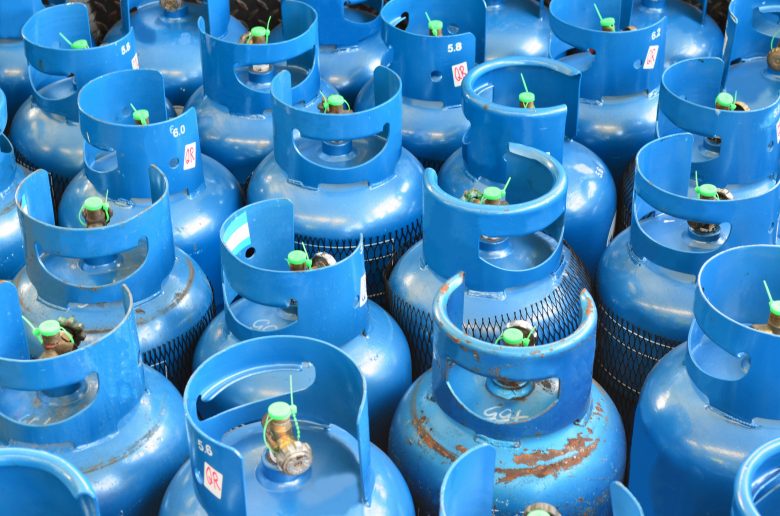
From powering home barbeques to torches and warehouse forklifts, propane is a useful and versatile gas. Simply it's besides a hazardous flammable material that carries huge amounts of explosive force because it's pressurized. This is why the proper storage, handling and transportation of propane according to the regulations prepare by OSHA and CGA (Compressed Gas Clan) is then essential.
Although the list of OSHA'southward storage and handling regulations is very long, the basic rules of handling and storing propane can exist condensed as follows:
Storage
- Industrial facilities tin store propane in cylinders inside buildings not frequented by the public (such equally industrial buildings) with the limit capped at 300 lbs. of propane. However, if the facility has special buildings or rooms dedicated to propane storage, the corporeality of propane allowed is 10,000 pounds. Designated rooms need to fulfill a number of very specific requirements listed on OSHA's website.
- OSHA specifies that cylinders cannot be stored about exits, stairways, entryways or close to high-traffic and decorated areas.
- Propane cylinders mustn't be stored close to or with other flammable or combustible materials.
- They should be stored in cylinder safety cages or cabinets in flat areas that don't collect water. They should be placed off the ground, on elevation of a surface that will not burn down.
- Any not-in-utilise cylinders should be stored exterior and in an open-air storage unit at least 20 anxiety from other buildings.
- Propane cylinders must never exist stored or placed in an area of excessive heat (120 degrees or higher) or near a heat source.
- The cylinders should be stored in the proper orientation with the relief valve in direct contact with the vapor infinite in the container:
- Grill cylinders should exist stored vertically.
- Forklift cylinders tin can be stored vertically or horizontally. When they are horizontal, the relief device must be located at the 12 o'clock position.
- Cylinders must be protected from falling by using a chain or another acceptable back up systems. Consider securing each cylinder separately to foreclose them all from falling when merely one is removed from storage.
- The dates on the cylinder collar should be checked periodically to ensure that the cylinder is not by its requalification date and to replace or commutation cylinders that are out of date.
- Cylinders need to exist checked for leaks and signs of rust and habiliment—even if they're under their requalification date, they may nevertheless need to replaced if they're in poor status.
- Fire extinguishers should exist placed within easy access of propane storage.
- Container valves must be protected while in storage by setting them into the container's recess to prevent the possibility of existence struck if the container is dropped, or by fastening to the container a ventilated cap or neckband that is constructed so that a blow would not exist transmitted to a valve or other connection.
Use
Whether using propane at home, on vacation or at work, post-obit the manufacturer's instructions can go along anybody safety. It doesn't matter if the cylinders are small plenty to fit in the car or if they require a forklift to send them, their utilise and inspections should always be handled with care.
- Always follow the manufacturer'due south instructions for whatever propane-powered equipment.
- Propane-powered device documentation should exist consulted for the proper use, refueling and cylinder-changing process.
- Merely trained and authorized personnel should replace liquefied petroleum gas (LPG) containers.
- Appropriate face and eye protection and gloves (loose fitting, such as insulated neoprene) must be worn when connecting and disconnecting propane cylinders from their hoses due to the possibility of freezer burn, which propane tin crusade instantaneously.
- Do not use metal tools when changing a cylinder.
- Do not utilize excessive force when opening a valve.
- Do not roll, elevate or drib the cylinder or allow it to bang against other objects.
- When a cylinder is not in use, the valve should exist airtight to avoid a potential leak.
- Inspect propane equipment periodically for possible leaks or malfunctioning parts:
- Audit the propane cylinder for cuts, gouges, dents and rusting and supervene upon if necessary. Never utilise a damaged cylinder.
- Never utilise matches or a flame to cheque for leaks. Utilise a leak detector or soap (castor a 50% liquid dish soap and fifty% water solution onto all hose connections and valves; bubbles indicate a leak). If you come across a leak, shut off the propane at the tank if information technology'due south safety to do so, tighten hose connections and check again for leaks using the dish lather and water solution.
- Practise not smoke or have whatever ignition sources such as flames or spark-producing electrical tools in the vicinity when handling propane.
- Never attempt to detach or cut open a propane cylinder.
- Do not permit the cylinder get too hot. Additionally, don't paint propane cylinders a nighttime colour—they are painted a light or reflective color to reduce estrus absorption from the sun.
- Never effort to modify or repair valves, regulators or other parts of the cylinder or apparatus.
- Practise not leave LPG-powered trucks about rut sources, stairways, exits or other decorated areas. Turn the service valve off when parking LPG-powered trucks for a long time.
- Empty propane cylinders are just as dangerous as full cylinders and the same safety precautions must exist followed.
Transportation
Propane cylinders are built to withstand a huge amount of pressure and they're meant to final. Simply they still crave gentle and careful handling when transported, because they could exist faulty and, despite their sturdy appearance, they tin still be hands damaged.
- The cylinders must be upright and secured during transport.
- The valves must always exist closed and, if required, sealed with a plug fifty-fifty if the cylinders are empty.
- Cylinders must not exist left in a closed vehicle, especially during hot conditions or if there's a run a risk of oestrus building up inside the vehicle.
- Ideally, cylinders crave ventilation for transportation.
- Do non smoke while handling or transporting cylinders.
- During unloading, the transport truck mustn't exist parked on public thoroughfares and it must exist at to the lowest degree v anxiety from storage containers, positioned and so that shutoff valves are readily accessible.
Storing and treatment propane tanks properly is an important function of remaining compliant. Many factors need to be taken into consideration, including nearby buildings, other combustible objects and awnings.
Too often, facilities using propane tanks have them stacked indoors, stored improperly and with no safety cages or protection. A lax attitude towards propane storage is often the result of self-approbation—other human factors tin can also compromise prophylactic during the transportation and employ of propane. Although the listing of OSHA requirements is long, it's worth taking a look to ensure that your facility is compliant, and to also assess whether human factors are affecting how workers handle propane and propane-powered devices.
On-demand webinar
Using a Homo Factors Framework for Safety and Operational Excellence
It tin can exist hard to see the connexion between condom, productivity, human being factors and organizational systems. This webinar volition demonstrate how a human factors framework can impact all areas of an organization, linking individual worker safety and organizational systems and provide an outline that allows leadership to manage safety-focused change.
Lookout at present
Tagged LPG, LPG-powered Trucks, OSHA, Propane, Propane Storage, Propane Use
johnsonapphimarly.blogspot.com
Source: https://safestart.com/news/the-key-to-understanding-osha-propane-regulations/
0 Response to "what law says that i have to transport propane tanks upright"
Post a Comment